Monday, 14 November 2011

successful poster campaigns

INCEPTION


This was a huge poster campaign. New posters were released regularly up until the theatrical release of the film, displaying different designs, but with similar attributes e.g. civilisation. Even the 'illusion' poster to the left appears, almost like a birds eye blueprint of a city.


Star power had been utilised, as big names were printed on each design e.g. Leo. These stars had been used as tools in selling the film to a more mainstream audience.


Inception began implanting the idea of mind crimes in the real-world – with warning posters like the one seen below.


Each poster has a QR code and, upon decoding it, I was sent to a new website: What Is Dream Share The site is an anonymous blog, in the fashion of conspiracy theories, as it attempts to figure out the mystery of the film’s core concept.

One of the articles on the blog discusses the origin of the device used to enter people’s minds in the film.

  This building sized poster is another example of what made this campaign stand out. It abides to the concept of 'mind games' and provides a nice little taster into the world of Inception.


HARRY POTTER: and the deathly hallows


A very iconic series, which has accumulated an incomprehensible number of fans. This particular number in the series happened to be the finale, so a great deal of hype grew over the release of it.

Teaser posters were used to great effect, as you can see to the left. Quite a contrast was formed with these posters in comparison to the ones previous in the series. You get a more eary, sinister feel from them- a far more mature use of advertising in comparison to their predecessors.

This particular poster presents the destruction of 'Hogwarts', an icon of the H.P series.  It would immediately catch the eye of the intended audience. For the fans, this is a very shocking image, hence making it more memorable. The tagline 'It All Ends Here' instigates that this is the final installment, so even people who aren't fans may become interested in seeing how this story ends. I know i was!

TRON
Tron: Legacy is a 2010 American science fiction film directed by Joseph Kosinski and produced by Steven Lisberger. It is a sequel to the 1982 film Tron.
Tron created one of the biggest poster campaigns of 2010, rivaling with the Harry Potter's campaign.

The stylistic visuals of these posters are very prominent, conveying a clear blue tone across each design, mixed with cyberpunk styled neon lighting.


The Tron: Legacy marketing campaign involved a triptych design, as three teaser posters were released in a build up to the final piece, constructed of all three.  These several individual one sheets have been released that connect to each other in a special way.  The final piece of the puzzle was unveiled via Empire and the above image is the finished product. See how they all came together below…


Tuesday, 8 November 2011

Does a bad review ruin the films chances?

Critics are there to criticise! It is indeed true that magazines need some writing to accompany the pretty pictures inside, but what effect do these words of review have on the films popularity?

Well it all depends on an audiences belief in them, for example, your model TV Buff or Aficionado audience member will more religiously make their mind up on whether to attend a showing or not in response to a film review, as apposed to a more mainstream viewer. I personally like to think of myself as a more mainstream viewer, relying more on the adverts of a film, than critical prose in a magazine etc. The same can be said for many people my age. it's generally more of an impulse trip to the cinema, than a well-thought, critic influenced decision. Now, considering that the largest proportion of cinema-goers are still in their youth, i will estimate that the majority have a similar frame of mind to my own.

In response to my viewpoint, it is a case that many badly reviewed films can initially get away with a large number of viewings. But ultimately a bad film will gain a bad reputation, and word will spread.

audience research

Sunday, 6 November 2011

the film poster in popular culture

Film posters are used as a key tool in attracting a target audience, and act as a clear, well-thought representation of the films concept. Progressively, in response to development of technology and variety of culture, posters have been distributed through different streams of format.


quite an effective form of poster advertisement is by the use of mobile phone screen-savers. Now these can become available at a set price, or as a free download. The truth is, either way it's a win-win situation in concern of the film's profit- a screen-saver sold at a premium will benefit gross sales automatically, but a free one would still act as a tool to lure film-goers or non-film-goers e.g. a teenager may show his or her friends this new film on their phone, and hence expand an audience.


Standard print posters are also still put to very good use as they're placed in clear view, quite strategically in certain locations e.g. at bus stops, train stations or near local cinemas. This takes into account the rate of foot fall, meaning that the more people who come into the proximity of the poster, the more attention it will grasp, and ultimately the more viewers the advertised film should gain.

This brightly lit 'District 9' poster displays the factor of location, quite cleverly with it's witty advertisement...


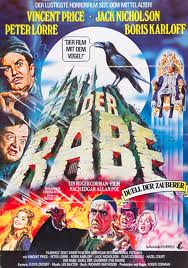
Film posters have developed greatly since the 1960's film era...


 As you can see, the concept of bright colours and big names became quite prevalent in those days. Posters were more 'In ya face' so to speak. But this style of advertisement was very effective back then, as the general film-going population were susceptible to these almost 'desperate' features. The slimmer variety in taste of genre meant that any member of audience would go to see one of these films, just because they were the latest thing going.


Today, film posters have been depicted in a variety of ways, to suit the diversity of viewers' tastes in film. This creates a plethora of different designs....

stop motion practice (swirly whirly)

In our last single lesson, Paddy and I created this very basic example of stop motion. This experience indefinitely showed us the patience it would take to create a fully constructed stop-motion piece. The advantage is that our piece will be a fusion between stop-motion and real time (predominantly real time), so the dilemma of time shouldn't become a problem.

Tuesday, 1 November 2011

mine and Paddy's rough script (strictly action based)


FADE IN;
INT. BEDROOM – DAY

Early morning. Curtains are closed. Lights are on. Character 1 is sitting on the computer, finishing a blog post. His room is plastered with superhero posters, newspaper articles and fan mail.

He walks over to the closet, grabs some clothes, and dresses. Picks up action figure, plays with it, and places it back down on the table. Picks up the car keys next to it, and exits the room, shutting the door behind him. Lingers on action figure.


INT. COUNCIL HALL – DAY

Neville is the head of the town council. He stands at the head of a council table. He addresses his fellow town council members as they enter the room and take their seats. He waits until everyone has sat down, before taking his own seat.

Neville queries local issues with council members, Each member has a meaningless and irrelevant issue and speak simultaneously, the volume in the room increases, and a ruckus occurs.

Silent Neville reaches under the table into his briefcase, pulls out a recent issue of the local newspaper, and throws it down the centre of the table. The council falls silent. Lingers on newspaper headline.


INT. BEDROOM – DAY

Lingers on the same newspaper issue that features in the council hall. Transition from newspaper to action figure on the opposite side of the room. Action figure twitches…

INT. COUNCIL HALL – DAY – CONTINUED

Council members are discussing prominent issue of a superhero vigilante scandal. Neville as head of authority brings the council to order, to bring reasonable explanations to the council’s attention.

Character 1 enters the council with mop or broom in hand. Dressed in an overall. He begins to sweep/mop as the council continues their discussion in the background.


INT. BEDROOM – DAY

Action figure replicates the movement of character 1 in the council hall. Action turns head towards corner of the room..

INT. COUNCIL HALL – DAY

Character one turns his head to face council in a movement that matches that of the action figure. Council continue to discuss specific details of supernatural events occurring in the town.

Focuses on character 1 from behind, as he imitates a superhero like pose (chest pushed out, fists on hips). He appears as a silhouette against the backlight.


INT. BEDROOM – DAY

Superhero figure is in a flying pose. OR in a single arm gun show pose (arm up, and tensed, hand rotating from front to back).


INT. COUNCIL HALL – DAY

Council talking about the description of the vigilante/superhero. Neville describes a person that sounds very similar to what character 1 looks like and a detailed profile of the vigilante’s stature, build, hair and facial features are put forward

Council fall silent yet again, and draw their attention towards character 1, as he continues to sweep. Character 1 becomes aware of the silence, stops sweeping, and looks up at his audience in a confused manner. Focus draws back to each council member as they each in turn convince themselves of the stupidity in their assumption.

One of the council members breaks the silence by declaring he is late for his 12 o’clock doctor’s appointment (open to another excuse to leave, etc) and this causes the meeting to adjourn, with each member peeling away for other commitments, leaving character 1 and Neville alone in the room.

Character one finishes his shift, and undoes his top button on his overall slightly revealing a suspicious looking garment beneath his overall. He says farewell to Neville, and heads for the door turning his back to Neville. Neville picks up on the unusual garment as he’s walking away and questions Character 1 on it. An awkward silence follows.. *sound effects – dramatic piano note.* Character 1 replies confidently that it’s a fancy dress costume, and he’ll be going as the vigilante. He’s a massive fan. Neville replies with a witty phrase.

Character 1 leaves, attention is brought back to Neville (facing the audience), who is packing his papers back into his briefcase, sat at the end of the table, closes his briefcase, slowly looks up, eyes flash red, and our superhero is revealed…


Tuesday, 25 October 2011

initial inspiration

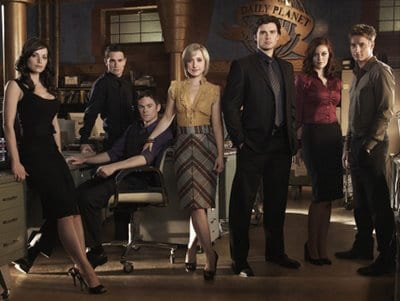
SMALLVILLE


Smallville is an American television series developed by writers/producers Alfred Gough and Miles Miller based on the DC comics character Superman, originally created by Jerry Siegel and Joe Shuster.

i have been quite a fan of this series, despite only really getting into it a couple of months back. The series is obviously based around the 'superhero' element, and action sequences are not a rarity throughout, but it was the insight into Clarke Kents personal life and human emotions that allowed me to respect the complexity of the program. The general narrative arc of the entire series  basically shows how Clarke develops into 'the man of steel', which is influenced by powerful factors in his life, for example, love, hate and moral values. These factors are indeed present in the old  DC Comics, and also provide a solid structure to the storyline of each issue. But to what effect? the concepts i mention are used very broadly in the old paper format editions, which collectively create the image of a caricature. Alternitavely, the protagonist shown in this series comes across as a true character, with his alien abilities fused with his complex human emotions.

In response to these ideas, Paddy and I have agreed that a less straightforward story of a superhero would be more suitable for short film. It would allow us to raise more enigmas, which would hopefully captivate an audience more effectively. We all know classic superhero storylines e.g. the hero defeats the bad guy and gets the girl etc. but we don't want to abide to such stereotypes. It's a short film-we can explore!